Quick answer: A CPMS (Charging Station Management System) is the backend software that runs an EV charging network. It communicates with chargers over OCPP, authorizes drivers, tracks and bills sessions, and gives operators a central control layer to manage chargers, smart charging, firmware, and reporting at scale.
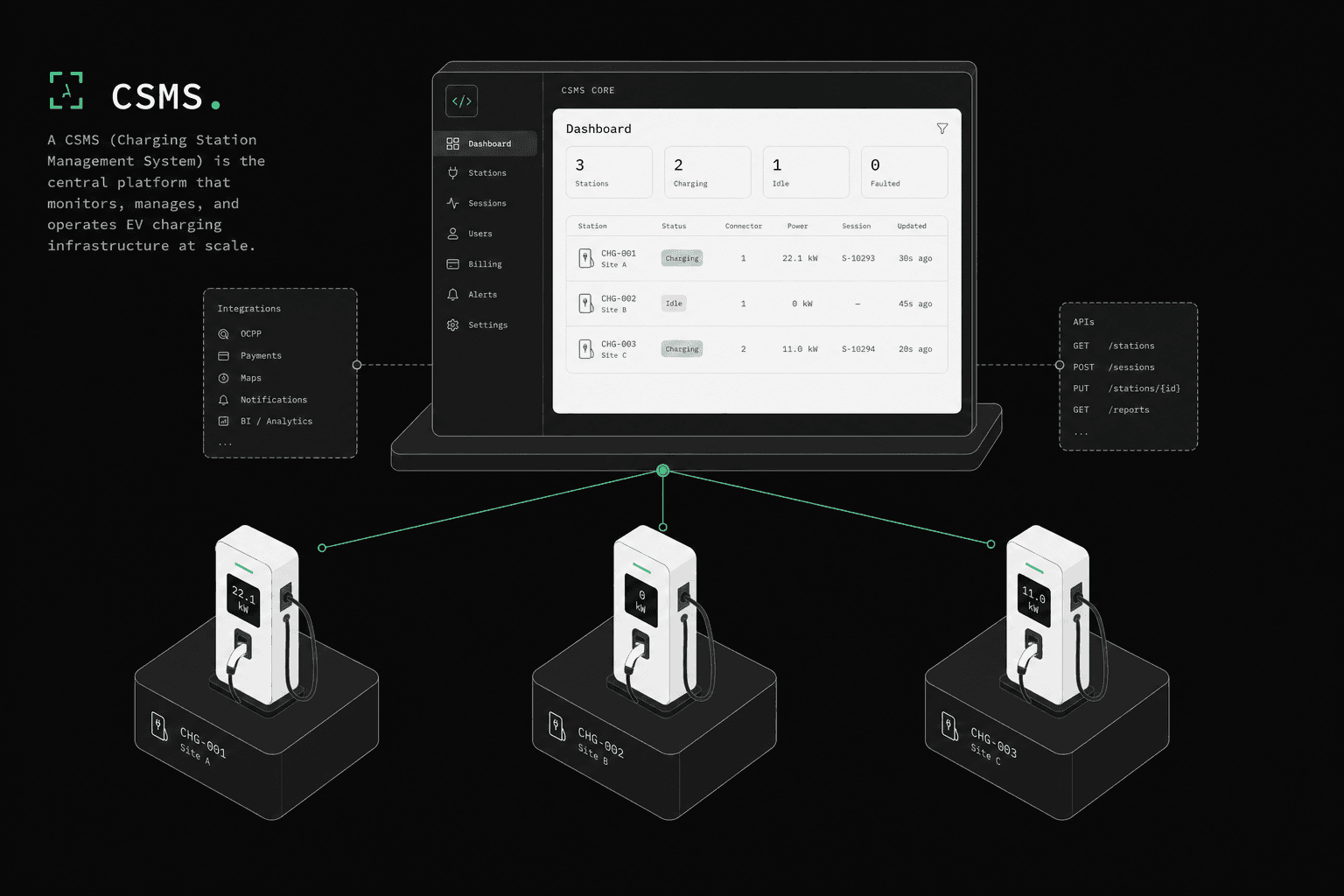
A CPMS (Charging Station Management System) is the backend software that operates an EV charging network. It communicates with chargers over OCPP, tracks sessions, authorizes drivers, applies pricing, and gives operators the control layer they need to run chargers at scale.
Think of a CPMS as the "brain" of a charging network — it tells chargers when to start and stop charging, handles driver authorization, collects usage data, and manages billing.
If you are building or evaluating one, continue with CPMS testing, OCPP 1.6 testing, or platform features.
What Does a CPMS Do?
Core Functions
| Function | Description |
|---|---|
| Charger Management | Monitor status, configure settings, trigger reboots remotely |
| Authorization | Validate driver RFID cards, app tokens, or Plug & Charge certificates |
| Transaction Management | Start, monitor, and stop charging sessions |
| Billing & Payments | Calculate costs, process payments, generate invoices |
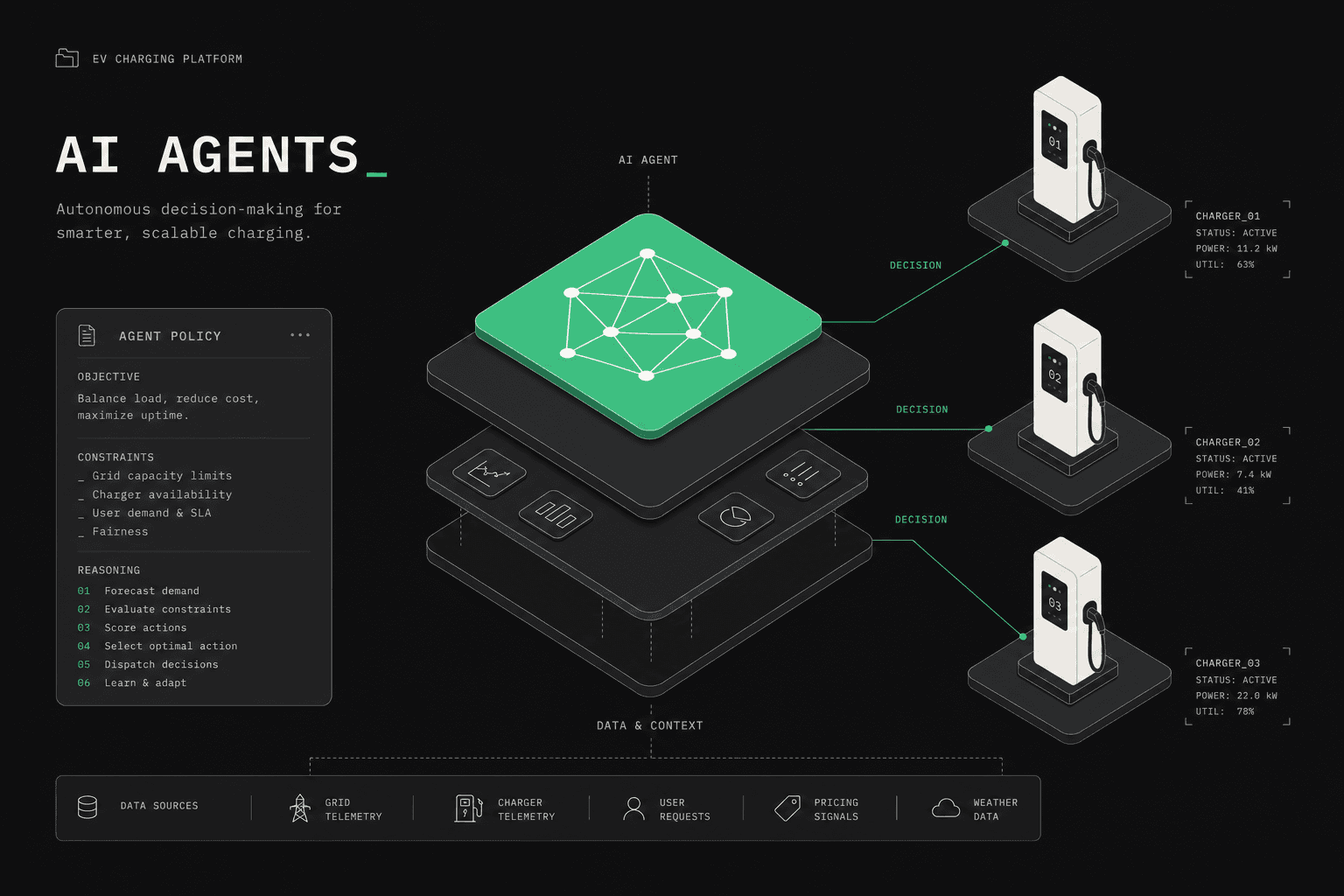
| Smart Charging | Manage power distribution across chargers based on grid capacity |
| Monitoring & Alerts | Real-time dashboards, error notifications, uptime tracking |
| Firmware Management | Push firmware updates to chargers over-the-air |
| Reporting | Usage analytics, revenue reports, energy consumption data |
Advanced Functions
- Roaming: Connect with other networks via OCPI for cross-network charging
- Energy Management: Integration with grid operators for demand response
- Fleet Management: Specialized features for commercial fleet charging
- White-Label: APIs for partners to build their own branded charging apps
How Does a CPMS Work with OCPP?
The CPMS acts as the server in the client-server architecture defined by the Open Charge Alliance's OCPP standard:
- Charger boots up and connects to the CPMS via WebSocket
- CPMS receives
BootNotificationand registers the charger - Charger sends
StatusNotificationupdates (Available, Charging, Faulted) - When a driver taps their RFID card, charger sends
Authorizerequest - CPMS validates and responds with
AcceptedorBlocked - Charging session begins, charger sends periodic
MeterValues - Session ends, CPMS processes billing via
StopTransaction
What CPMS Platforms Are Available?
| Platform | Type | Notable Features |
|---|---|---|
| ChargePoint | Proprietary | Largest US network, integrated hardware+software |
| EVBox (Everon) | Commercial | European market leader, strong OCPI support |
| Current | Commercial | GE-backed, utility-focused |
| Open e-Mobility | Open Source | Free CPMS with OCPP 1.6/2.0.1 support |
| SteVe | Open Source | Java-based, widely used for testing |
| CitrineOS | Open Source | Modern TypeScript CPMS for OCPP 2.0.1 |
Should You Build or Buy a CPMS?
Build Your Own
- Pros: Full control, custom features, no licensing fees
- Cons: often a year or more of development, ongoing maintenance, OCPP expertise required
- Best for: Companies where charging is a core product differentiator
Buy/License
- Pros: Fast deployment, proven reliability, vendor handles updates
- Cons: Licensing costs, less customization, vendor dependency
- Best for: Companies where charging is a utility, not the core business
White-Label
- Pros: Your brand, their technology, faster than building
- Cons: Limited customization, ongoing fees
- Best for: Companies wanting branded experience without development
How to Test a CPMS
Whether you're building, buying, or evaluating a CPMS, thorough testing is critical. You need to validate:
- OCPP message handling (every OCPP 1.6 message type)
- Error scenarios (network drops, invalid messages, timeout handling)
- Concurrent connections (can it handle 1,000+ chargers?)
- Smart charging algorithms (does load balancing work correctly?)
- Firmware update flows (does OTA work reliably?)
- Billing accuracy (are transactions calculated correctly?)
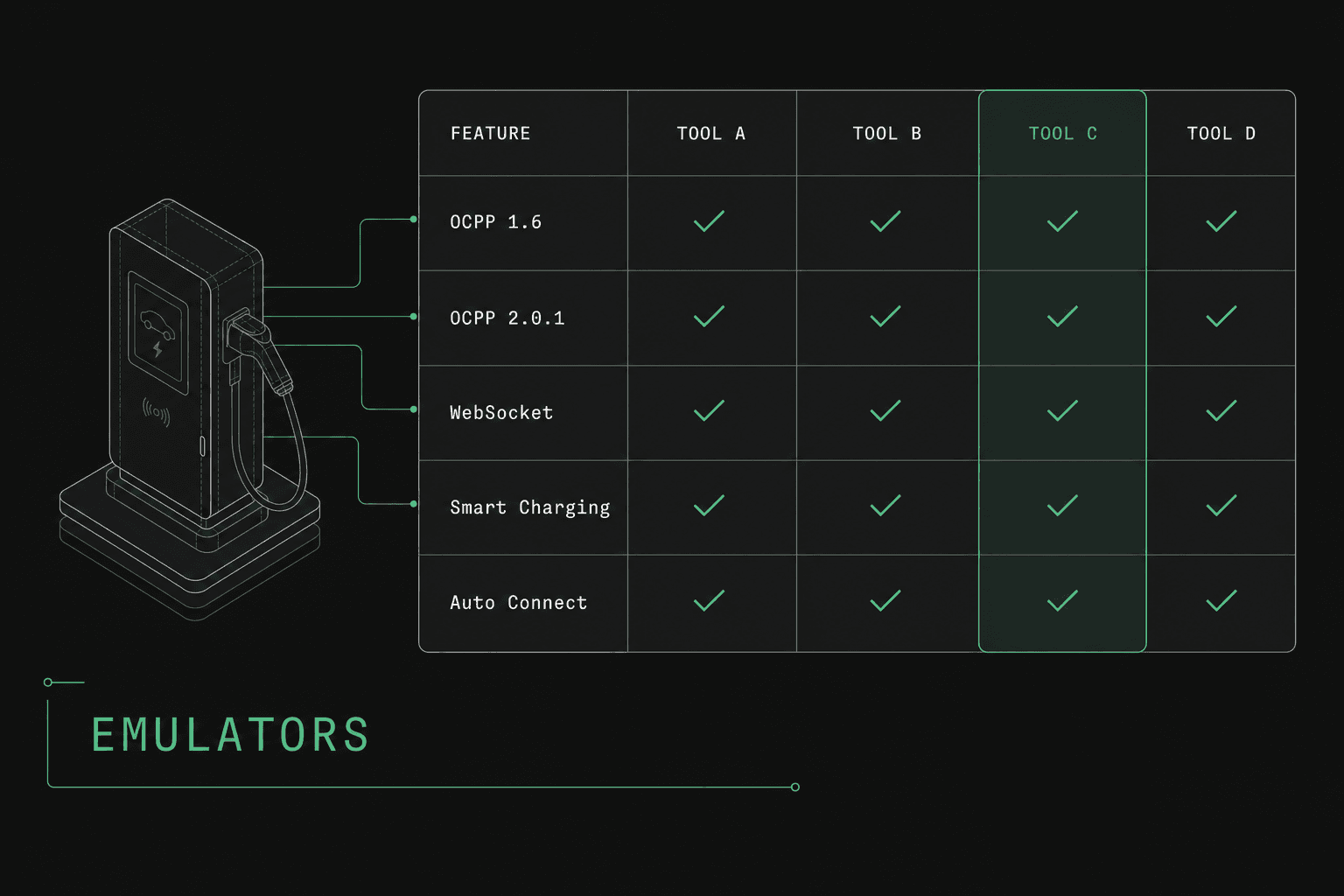
OCPPLab simulates realistic charger behavior so you can test your CPMS without physical hardware. Deploy 1000+ virtual charge points, run automated test suites, and validate every OCPP message flow.
Frequently Asked Questions
What is the difference between CPMS and CPMS?
They are the same thing. CPMS (Charging Station Management System) is the newer, more widely used term. CPMS (Charge Point Management System) is the older term. Both refer to the backend software managing a charging network.
Can a CPMS manage chargers from different manufacturers?
Yes — that's the entire purpose of OCPP. Any OCPP-compliant charger from any manufacturer can connect to any OCPP-compliant CPMS.
How much does a CPMS cost?
Ranges from free (open source like SteVe or Open e-Mobility) through per-charger monthly subscriptions for commercial platforms, up to substantial enterprise licensing fees. Costs depend on features, scale, and support level.